Robusta vs arabica: what's the difference
Nearly all coffee in the world comes from two species: arabica and robusta. Arabica got the marketing and the specialty café shelves; robusta got a reputation as the "second-grade" bean. That reputation is unfair — robusta is exactly what gives Vietnamese coffee its density and strength.
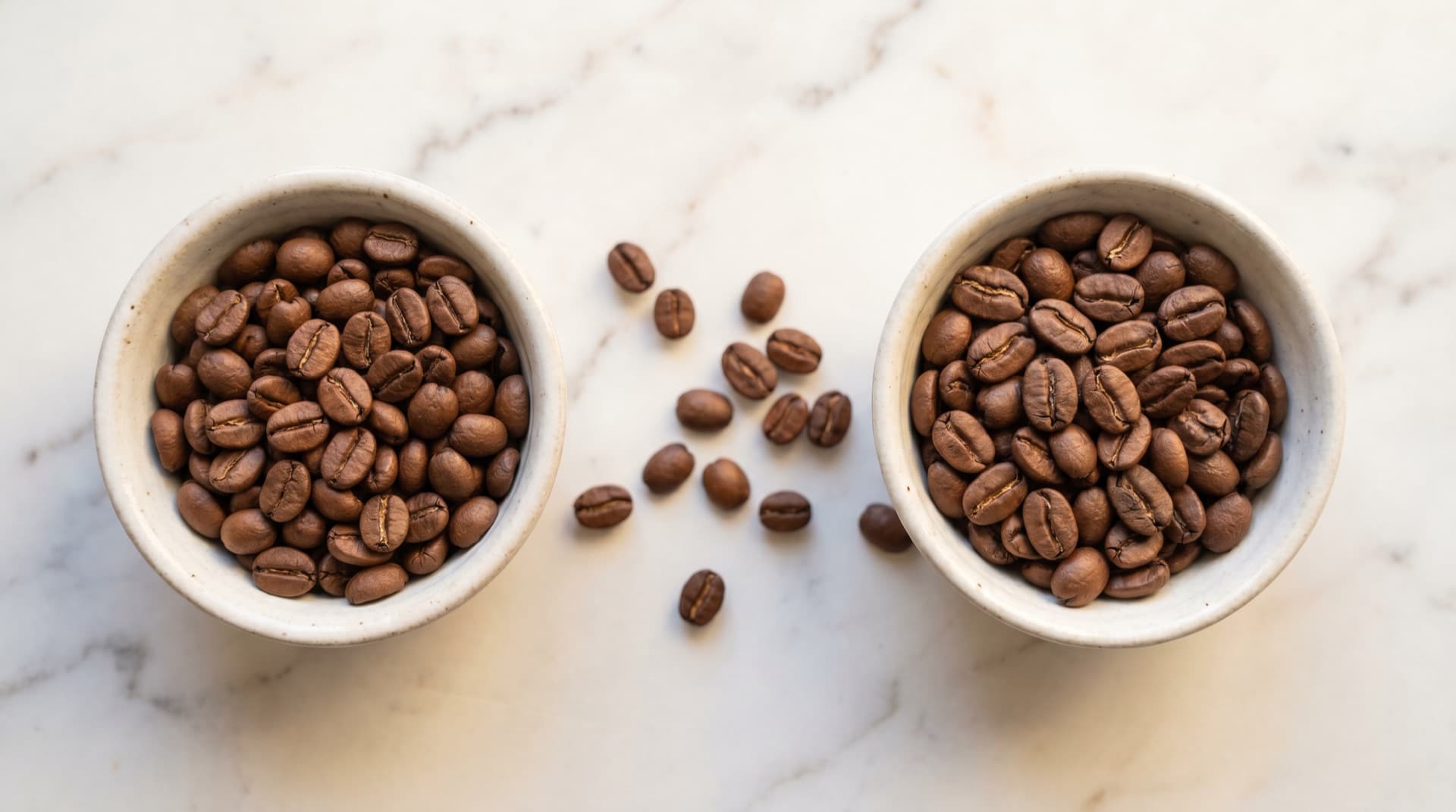
The main differences in one table
| Arabica | Robusta | |
|---|---|---|
| Caffeine | 1.2–1.5% | 2.2–2.7% — nearly double |
| Taste | Acidity, berry and floral notes | Dense body, dark chocolate, nut, earthy notes |
| Growing altitude | 800–2000 m above sea level | Up to 800 m, tolerant of heat and disease |
| Sugars and oils | More — hence the softness and sweetness | Less — hence the density and strength |
| Crema | Thinner | Thicker and more stable |
The name itself comes from robust: the tree withstands heat and diseases that kill arabica. That is why robusta grows where arabica simply cannot survive — including the lowlands of central Vietnam.
Why Vietnam chose robusta
Vietnam is the world's largest robusta producer and the second-largest coffee exporter overall, after Brazil. The heart of Vietnamese coffee is Dak Lak province and its capital Buon Ma Thuot: the red basalt soil and hot climate of the Tay Nguyen plateau suit robusta perfectly. That is where the Trung Nguyên factory stands.
Vietnamese coffee culture grew around robusta, not in spite of it. Slow brewing in a phin filter and condensed milk are both rituals built for its dense, bitter-chocolate profile. Arabica would simply get lost in that cup.
So which one is better?
Wrong question. They are two different drinks for different expectations: arabica is about acidity and delicate nuance, robusta is about strength, body and a long bitter-chocolate finish. The morning cup that actually wakes you up is robusta.
A practical rule: if you like your espresso dark, your coffee with milk or condensed milk, or strong Turkish-style cups — go for robusta or robusta-based blends. In the Trung Nguyên catalog that means ground blends for the phin and instant G7 formats.
- Trung Nguyên Legend blends — Tay Nguyen plateau robusta, roasted and ground for the phin;
- G7 — instant coffee made from the same robusta, for when there is no time to brew;
- Want to compare for yourself — start with Legend Classic: the benchmark Vietnamese profile.
Frequently asked questions
Does robusta really have more caffeine?
Yes, nearly double: 2.2–2.7% versus 1.2–1.5% in arabica. Caffeine is the plant's natural pest defence, and the hardy robusta carries more of it.
Is robusta a low-grade coffee?
No. A specific lot can be low-grade — a species cannot. Robusta grown on the Tay Nguyen plateau and processed properly is a product in its own right, with the dense chocolate profile that all of Vietnamese coffee culture is built on.
Which is better for coffee with milk or condensed milk?
Robusta. Milk and condensed milk soften the bitterness while the body and strength remain — arabica loses its taste in these recipes. The classic example is Vietnamese condensed-milk coffee (cà phê sữa).
What is G7 instant coffee made from?
From Vietnamese robusta — the same raw material that goes into Trung Nguyên ground blends. We have a separate guide on how G7 is made and which formats exist.
Taste real robusta
Ground blends and instant G7 from Buon Ma Thuot — delivered across Tashkent in 1–2 days.