
How to brew Vietnamese coffee with a phin
The phin is the metal filter Vietnam has brewed its coffee with for over a century. No machines, no capsules: coffee, hot water and five minutes of patience. Here is how to get the cup right on your first try.
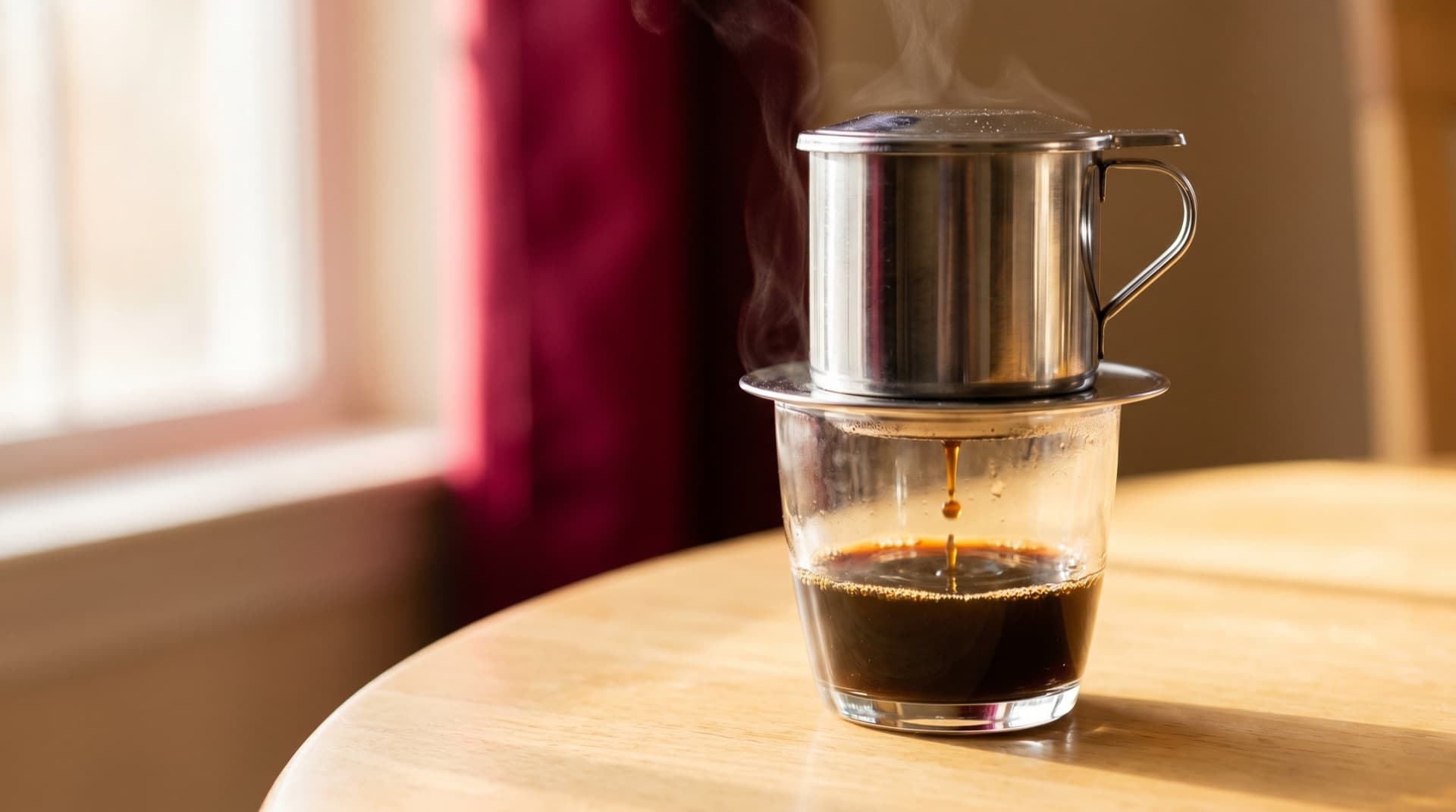
What a phin is
A phin is a compact filter made of stainless steel or aluminium that sits directly on your cup. It has four parts: a base plate, a perforated brewing chamber, a gravity press and a lid. Water passes through the coffee bed slowly, under its own weight — which is why the drink comes out dense and concentrated, closer to espresso than to filter coffee.
In Vietnam the phin is the default: it is how coffee is brewed at home and in street cafés alike. Trung Nguyên ground coffee is milled for it — a medium grind, slightly coarser than espresso.
What you need
- A 100–120 ml phin (the most common size);
- 3 tablespoons of ground coffee — about 20–25 g. The classic choice is Trung Nguyên Legend Classic;
- Hot water at 92–96 °C — boil the kettle and wait half a minute;
- A cup and 4–5 minutes.
Step by step
- 01Preheat the phin and the cupRinse both with boiling water. Cold metal steals heat from the brew, and the coffee comes out weaker than it should.
- 02Add the coffee3 tablespoons, then a gentle shake so the bed sits level. Place the press on top without pushing it down — it should simply rest on the coffee.
- 03Let the coffee bloomPour in 25–30 ml of hot water and wait 30 seconds. The grounds swell and get ready for brewing — this step is the one people skip, and it affects the taste more than anything else.
- 04Top up the waterFill the phin to the brim (about 100 ml) and put the lid on to hold the temperature.
- 05Wait 4–5 minutesThe coffee should drip at roughly one drop per second. When it stops dripping, it is ready. Drink it black, with sugar, or with condensed milk.
Common mistakes
- The coffee runs through in a minute — the grind is too coarse or there is too little coffee. The cup will taste watery.
- It drips for more than 7 minutes — the press is pushed down too hard. The brew turns bitter and over-extracted.
- Water straight off the boil — above 96 °C robusta turns harshly bitter. Let it cool to 92–96 °C.
- The phin was not preheated — the brew runs below temperature and the coffee never opens up.
The classic next step is condensed milk in the cup: that is cà phê sữa, Vietnam's most famous recipe. We cover it in a separate guide.
Frequently asked questions
Can I brew Vietnamese coffee without a phin?
Yes. The closest substitute is a french press: 20 g of coffee per 200 ml of water, steeped for 4 minutes. A regular pour-over filter works too. The cup comes out a little softer than from a phin, but the robusta character stays.
What grind size does a phin need?
Medium, slightly coarser than espresso. Trung Nguyên ground coffee is already milled for the phin — no extra grinding or sifting needed.
How much coffee per cup?
20–25 g (3 tablespoons) per 100 ml of water. That is the strong Vietnamese ratio; if the drink feels too dense, add hot water to the cup rather than cutting the dose.
Why did my coffee turn out bitter?
Three usual causes: the water was at a full boil (above 96 °C), the press was pushed down too hard, or the brew ran longer than 6–7 minutes. Fix any of them and the harshness goes, leaving robusta's dense chocolate taste.
Coffee for the phin — in the catalog
Trung Nguyên ground blends straight from the Buon Ma Thuot factory. Delivery across Tashkent in 1–2 days.